
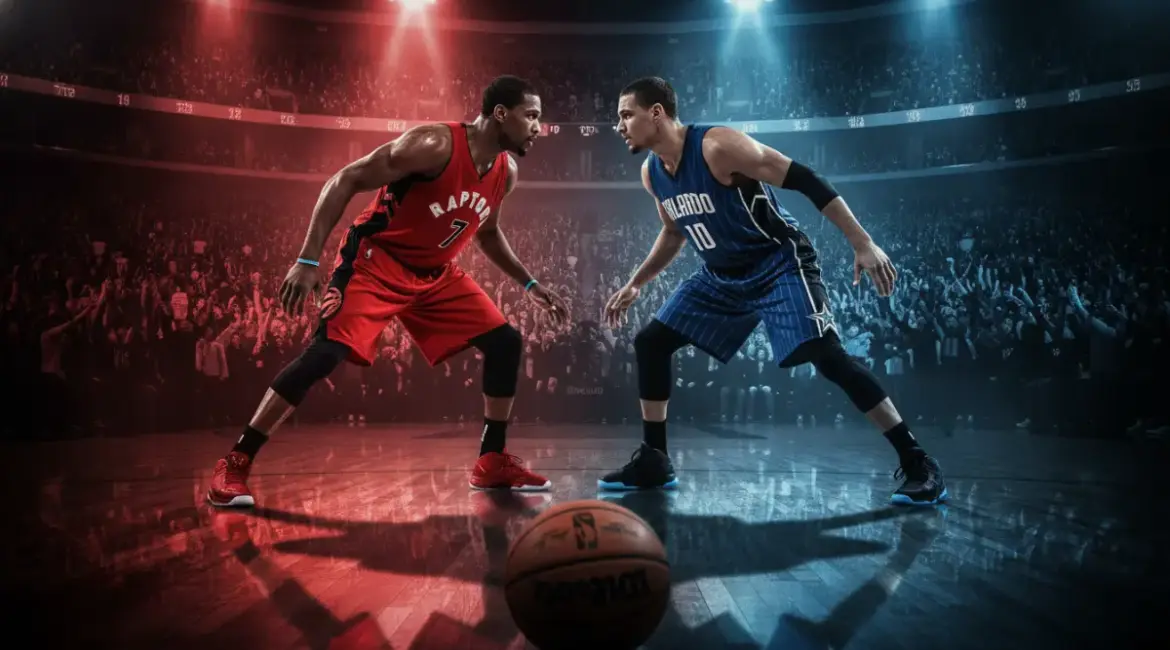
Toronto returns to Scotiabank Arena on Wednesday, October 28, 2026, hoping to turn the page after an uneven showing against Minnesota. The Raptors began the season with two victories, but their 117–94 loss to the Timberwolves exposed problems with half-court execution and offensive consistency.
Orlando presents a difficult response opportunity. The Magic enter the matchup at 1–2 after defeating the New York Knicks 111–102 on the road, a result that showed they can compete even without several major contributors. Toronto holds a 2–1 record, but the injury situation on both sides makes this early Eastern Conference meeting less predictable.
Game Setting and Immediate Stakes
The game is scheduled for 7:30 p.m. ET at Scotiabank Arena, with TSN carrying the Canadian broadcast. Toronto is the home team, while Orlando arrives with momentum from its win in New York. The clubs will meet again in the same building on Friday, October 30, creating a short series in which adjustments could matter almost as much as the opening result.
That quick turnaround adds another layer to Wednesday’s contest. Coaches will have limited time to correct defensive mistakes, alter matchups, and find ways to attack depleted rotations. The first game may therefore serve as both a standalone matchup and an information-gathering exercise before the second meeting.
Toronto’s opening results have produced a mixed picture. The Raptors demolished Chicago 135–92 in their first game, then handled Washington 112–102. Against Minnesota, however, their scoring dropped sharply, and the offense struggled to create efficient looks once the Timberwolves took control.
The Main Questions Facing Toronto
The most immediate concern is whether the Raptors can rediscover the ball movement and pace that fueled their first two wins. Minnesota held Toronto to 94 points, and the Raptors had difficulty generating reliable offense in the half court. A better performance will require more movement away from the ball, stronger screening, and earlier involvement from the team’s leading creators.
Scottie Barnes is central to that response. He played 28 minutes without scoring against Minnesota after producing 28 points and 14 rebounds against Washington. His all-around ability gives Toronto a way to attack mismatches, but he must be willing to apply pressure rather than simply wait for opportunities to develop.
Barnes can influence the game as a scorer, rebounder, passer, and defender. If he attacks the rim and forces Orlando’s defense to collapse, Toronto should create cleaner perimeter chances for its shooters. If he remains passive, the Raptors may again become too dependent on difficult attempts late in the shot clock.
RJ Barrett is another important offensive piece. His ability to drive into the lane and score through contact can stabilize Toronto when outside shots are not falling. Immanuel Quickley will also have a major role because his ballhandling and pace can prevent Orlando from settling into its preferred defensive rhythm.
Young guard Ja’Kobe Walter offers a different kind of spark. He scored 22 points against Minnesota, giving Toronto a promising perimeter option despite the loss. His shooting can stretch the floor, but the Raptors will need contributions from several players rather than expecting one reserve performance to solve the larger offensive issue.
Why Orlando Cannot Be Overlooked
The Magic opened the campaign with losses to Atlanta and Minnesota, yet their performance in New York changed the tone around the team. Orlando won 111–102 without Paolo Banchero, its leading offensive focal point, and received production from multiple players instead of relying on a single star.
Franz Wagner led the way with 23 points, 13 rebounds, and nine assists. That line reflects more than scoring ability; it shows how effectively Wagner can organize possessions, attack defensive gaps, and keep teammates involved. Toronto must account for him as both a scorer and a playmaker.
Desmond Bane added 22 points and provides Orlando with a serious threat beyond the arc. Tristan da Silva and Anthony Black also supplied useful support in the victory over New York. If those secondary contributors remain productive, the Magic can compensate for the absence of their usual centerpiece.
Wagner will likely receive increased defensive attention in Toronto. The Raptors need to contest his drives without overcommitting, because his passing can punish help defenders who leave shooters unattended. Transition defense will be especially important; allowing Wagner to attack before Toronto’s defense is organized could give Orlando easy points.
Injuries Reshape Both Rotations
Toronto will be without Kawhi Leonard because of swelling in his left knee. Reports indicate that the veteran forward is expected to miss multiple weeks, and his absence removes an important two-way presence from the Raptors’ lineup.
Nate Bittle is also listed out with a foot injury, further reducing Toronto’s available depth. The Raptors must replace Leonard’s scoring, defensive positioning, and late-clock decision-making through collective effort rather than a single direct substitute.
Orlando has an even longer injury list. Banchero is sidelined by a right high-ankle sprain, while Jalen Suggs is unavailable with a knee injury. Jonathan Isaac is also out, and the Magic’s report includes additional absences involving Noah Penda and Izaiyah Nelson.
Those losses affect several areas at once. Banchero’s absence removes a powerful half-court scorer, Suggs normally adds defensive pressure and organization, and Isaac provides size and defensive versatility. Orlando’s win over New York demonstrated that the remaining players can respond, but repeating that level of execution on the road will be demanding.
Three Matchup Factors Worth Watching
- Barnes against Orlando’s help defense. Toronto needs Barnes to be aggressive early, especially when Orlando’s defense is still settling into its assignments. His ability to draw multiple defenders could open opportunities for Barrett, Quickley, and Walter.
- Bane’s three-point opportunities. Toronto’s perimeter defenders must communicate on screens and rotations. Giving Bane clean looks would allow Orlando to replace some of the offense missing from Banchero and Suggs.
- The battle for extra possessions. Rebounding may become decisive if both teams struggle to create efficient shots. Toronto must finish defensive possessions, while Orlando will try to use its size and athleticism to generate second-chance opportunities.
Turnovers could also influence the outcome. Toronto cannot afford to give Orlando transition chances while operating with a reshaped rotation. Clean decision-making from Quickley and the other primary handlers will be essential, particularly if the Magic apply pressure to force the ball out of Barnes’ hands.
Betting Angles and Player Expectations
Toronto’s home-court advantage and stronger record make the Raptors a logical side to consider, but the injury reports complicate any spread assessment. Orlando already proved that it can remain competitive without Banchero, while Toronto must now adjust to life without Leonard. Confirmed starters and late availability updates should be reviewed before evaluating the moneyline or point spread.
The total-points market is similarly difficult to read. Missing stars could reduce offensive efficiency and produce slower possessions, yet defensive breakdowns or strong outside shooting could push the game toward a higher total. The most useful indicators will be each team’s rotation size, expected pace, and three-point volume.
Barnes’ player markets deserve attention after his scoreless outing against Minnesota. Toronto may deliberately place the ball in his hands more often, creating potential value in points, rebounds, or assists depending on the numbers offered. Still, his production will depend on whether Orlando crowds the paint or allows him to attack single coverage.
Barrett could see additional scoring responsibility without Leonard, while Quickley may be asked to create more opportunities for teammates. Their respective points and assists markets may become more attractive if Toronto’s rotation leaves the pair with greater control of the offense.
Prediction: Toronto Has a Narrow Edge
The Raptors have the better record, the benefit of playing at home, and enough available offensive talent to recover from the Minnesota defeat. Their best path is straightforward: move the ball, involve Barnes early, protect the defensive glass, and avoid allowing Orlando to establish a transition game.
Orlando should not be dismissed. Wagner is capable of controlling several parts of the game, Bane can change the scoreboard quickly, and the Magic already demonstrated composure in a difficult road environment. A close contest is more likely than a comfortable result for either team.
Toronto is the pick to win a competitive matchup. The prediction depends heavily on Barnes returning to an assertive role and on the Raptors finding better offensive balance than they showed against Minnesota.
The rematch on Friday will provide an immediate sequel, with both coaching staffs able to respond to what happens in the opener. For now, Toronto’s priority is to protect its promising start, rebuild confidence at home, and establish a more dependable identity before the schedule becomes more demanding in November.