
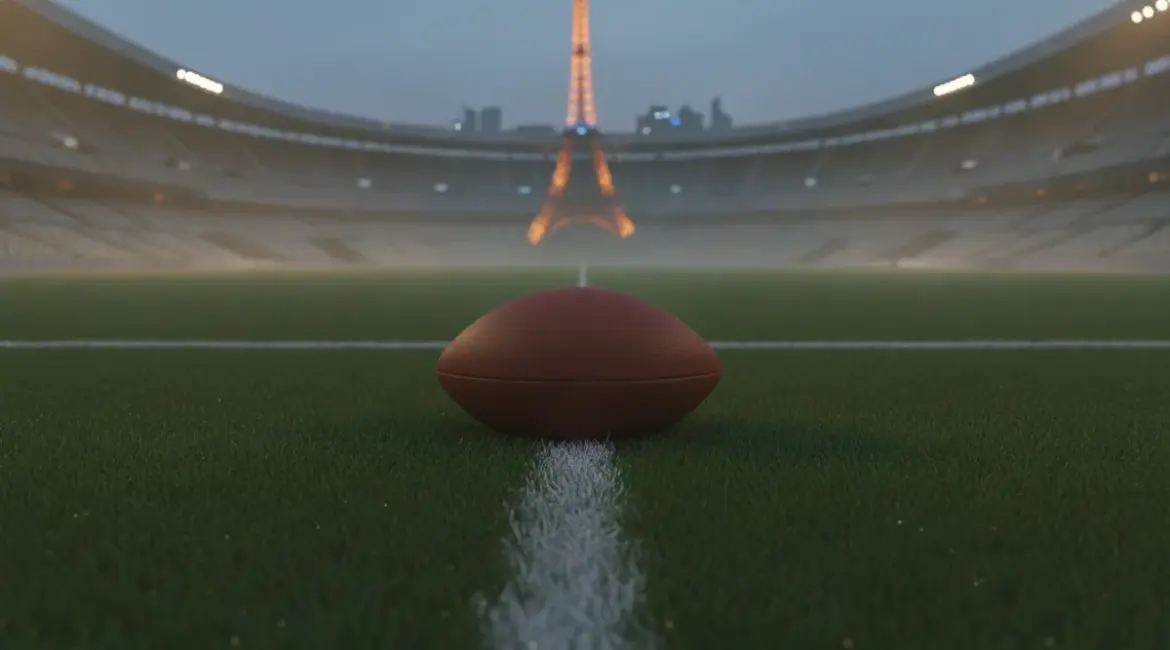
The Pittsburgh Steelers spoiled the New Orleans Saints’ historic visit to France with a 16-10 victory at Stade de France in Saint-Denis. The result marked the NFL’s first regular-season game played in France and improved Pittsburgh’s record to 5-2, while New Orleans fell to 2-5.
The final score reflected a defensive contest, but three problems shaped the Saints’ afternoon: an almost nonexistent ground attack, a missed fourth-quarter kick and a costly interception inside the red zone. New Orleans generated enough through the air to remain competitive, yet its mistakes prevented the team from taking control.
Three Plays That Decided the Paris Contest
- Payton Wilson’s interception: With New Orleans threatening from the Pittsburgh 11-yard line, the Steelers linebacker stepped in front of a Tyler Shough pass intended for Chris Olave. The turnover stopped a potential go-ahead touchdown and gave Pittsburgh the opportunity to extend its advantage.
- Chris Boswell’s field goal: Boswell converted from 39 yards after the interception, putting Pittsburgh ahead 16-10 in the third quarter.
- Daniel Carlson’s miss: The Saints kicker pushed a 52-yard attempt wide right in the final period, leaving New Orleans without a chance to make the score a one-possession game through a field goal.
Shough accepted responsibility for the interception, saying the pass needed to be placed farther outside. The Saints had been highly productive in the red zone before the game, but that single mistake became one of the most damaging moments of the afternoon.
New Orleans Could Not Establish the Run
The Saints finished with only 18 rushing yards, a total that made the offence predictable and placed heavy pressure on Shough. He attempted 38 passes and completed 30 for 278 yards, with one touchdown and one interception.
New Orleans coach Kellen Moore faced repeated questions about the running game after the loss. The Saints’ inability to gain consistent yardage on early downs allowed Pittsburgh’s defence to focus on the passing attack, especially in important situations.
Despite those limitations, Shough kept New Orleans within reach. His one-yard touchdown pass to Devaughn Vele on fourth-and-goal tied the game 10-10 late in the second quarter. Alvin Kamara also contributed seven receptions for 57 yards, giving the Saints a reliable outlet when the rushing attack stalled.
However, the passing production could not fully compensate for the lack of balance. Pittsburgh held the Saints scoreless in the second half and protected its six-point lead through the final whistle.
A Historic Setting With High Expectations
Stade de France provided a major stage for the NFL’s French debut. The stadium, built for the 1998 World Cup, can accommodate more than 80,000 spectators and has hosted major football, Olympic and international sporting events. Attendance for the game reached 78,488.
The venue does not have a permanent tenant, allowing it to host a broad calendar of events. It welcomed competitions during the 2024 Olympics and has previously staged three UEFA Champions League finals. For the NFL, its large capacity and location near Paris made it a natural choice for the league’s first regular-season game in France.
The playing surface also required preparation. Stadium crews replaced the usual natural football pitch with a hybrid surface combining natural grass and synthetic fibres, a setup designed to withstand the demands of an NFL game.
Security was another consideration during the week. Unrest and protests had spread across France, prompting the league to increase its security measures. NFL executive vice-president Peter O’Reilly said officials never seriously considered cancelling or relocating the game.
What the Result Means for the Saints
The Saints entered the international game hoping to use the week to strengthen their connection with French supporters. The organization operates French-language social media accounts, and owner Gayle Benson was among the team representatives who met French President Emmanuel Macron to discuss the game and the NFL’s future in the country.
That long-term strategy depends partly on competitive football. Jan Woska, the Saints’ international relations liaison, has emphasized that winning is essential to attracting new supporters. A defeat in the league’s first French show offered little help on that front.
American football still trails several established sports in France. Woska has ranked it 11th in national popularity, behind activities including judo, swimming and fencing. The NFL therefore sees youth participation and flag football as important tools for building a larger audience.
Flag Football Offers a Different Route to Growth
Flag football is central to the league’s international plans because it removes tackling while retaining the sport’s passing, running and strategic elements. The format is scheduled to make its Olympic debut in 2028, giving the NFL another opportunity to introduce the game to young athletes and families.
NFL executive Brett Gosper has described flag football as a major part of the league’s fan-acquisition strategy. The Saints are also connected to a French tournament whose winners receive a trip to New Orleans, creating a direct link between local participation and the club’s home market.
New Orleans Heads Into Its Bye Week With Questions
The Saints will now return home with a 2-5 record and several areas requiring attention. The club has not reached the playoffs since the 2020 season, and the latest loss added pressure to a young roster that general manager Mickey Loomis described earlier in the week as still developing.
Moore said the organization would evaluate everything during the bye week, including the kicking operation and the offensive approach. Carlson’s late arrival in Paris was connected to his wife’s impending delivery, but Moore said that circumstance was not responsible for the missed attempt.
The most urgent issue remains the ground game. Eighteen rushing yards is not simply a poor statistical result; it changes how an opponent can defend every subsequent possession. Unless New Orleans finds a way to create more production on the ground, strong passing numbers from Shough may continue to be undermined by predictable play-calling and pressure in critical situations.
For Pittsburgh, the trip produced a third consecutive win and another example of a defence capable of protecting a narrow lead. For the Saints, France offered a memorable international setting but a familiar football problem: too many lost opportunities when the game was still there to be won.