
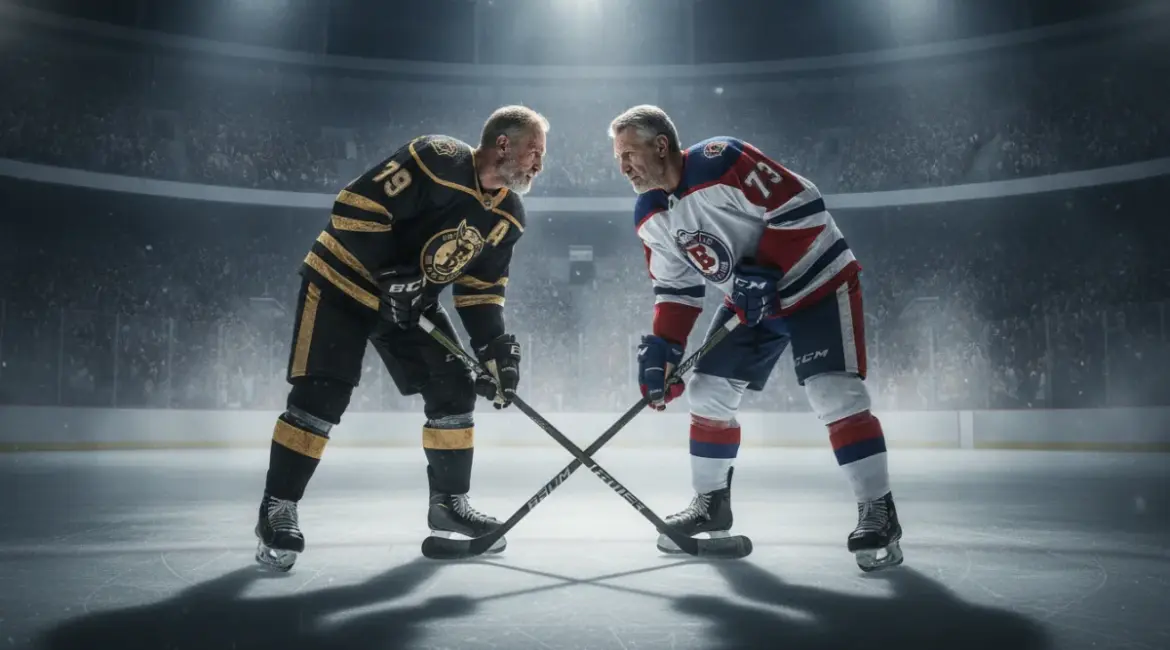
Sidney Crosby and Alex Ovechkin have shared the NHL stage for more than 20 years. When the Pittsburgh Penguins visit the Washington Capitals tonight, their latest meeting will carry unusual weight because Ovechkin has announced that the 2026-27 season will be his last in the league.
The game is still a regular-season contest, but it may also represent the opening of the final phase in one of hockey’s most important rivalries. Every remaining Crosby-Ovechkin matchup now feels less like routine scheduling and more like a limited opportunity to watch two generational stars compete against each other.
A Farewell Countdown Changes the Meaning of Tonight
For most of Crosby and Ovechkin’s careers, another meeting was always waiting somewhere ahead. If one game ended without a defining moment, fans could look forward to the next Penguins-Capitals matchup, another playoff race, or another possible postseason series.
That assumption no longer exists. Ovechkin, now 41, has confirmed that he will leave the NHL after the 2026-27 campaign. He enters his 22nd season as the league’s career goal-scoring leader with 929 goals, giving every Capitals home game a heightened sense of occasion.
The announcement is especially meaningful because Crosby and Ovechkin entered the league during the same 2005-06 season. Their careers developed side by side, first as a comparison between two young stars and later as a defining contest between players who helped shape an entire era.
Ovechkin’s final-season announcement also adds emotion to the Capitals’ home opener. Washington fans will have many chances to celebrate their captain, but a game against Crosby gives the occasion a unique historical backdrop.
How Their Different Styles Built a Lasting NHL Classic
Crosby and Ovechkin were compared almost immediately after arriving in the NHL. Pittsburgh selected Crosby first overall in the 2005 draft, while Washington had chosen Ovechkin with the top pick the year before.
Their approaches to the game were never identical. Crosby built his reputation through anticipation, puck control, passing precision, balance and the ability to create plays from the middle of the ice. Ovechkin became famous for explosive skating, strength, aggressive attacks and a shot that remains among the most recognizable weapons in hockey.
Those contrasts made every Penguins-Capitals game compelling. Crosby could influence a shift by extending possession and finding a teammate in traffic. Ovechkin could change the score with a single release from the left faceoff circle.
They have faced each other more than 100 times in the regular season and playoffs. Their rivalry remained relevant because it combined statistical excellence with stakes that kept rising as both players collected awards, championships and records.
The Playoff Battles That Turned Competition Into History
The rivalry reached its highest intensity in the Stanley Cup Playoffs. Crosby and Ovechkin have met in four postseason series, and the winner of each series eventually won the Stanley Cup.
Pittsburgh defeated Washington in 2009, 2016 and 2017. Each of those victories ended with the Penguins raising the Cup, reinforcing the idea that their head-to-head battles carried consequences far beyond one round of the playoffs.
Washington finally reversed the pattern in 2018, eliminating Pittsburgh in the Eastern Conference Second Round. The Capitals then continued their run and captured the first Stanley Cup in franchise history, giving Ovechkin the championship that had long been missing from his résumé.
Across 25 playoff games against one another, Ovechkin has 33 points, including 15 goals and 18 assists. Crosby has 30 points, with 13 goals and 17 assists. The narrow difference reflects how closely matched the two superstars have been despite their contrasting methods.
The most memorable example came in Game 2 of the 2009 Eastern Conference Semifinals. Both players scored hat tricks in a 4-3 Washington victory, yet Pittsburgh won the series in seven games and eventually claimed the championship.
That performance captured the rivalry’s appeal. When one captain produced something extraordinary, the other often answered with a performance of his own.
Why Canadian Viewers Remain Connected to Crosby
Crosby’s importance extends well beyond Pittsburgh. The Nova Scotia native has represented Canadian hockey for more than two decades and remains one of the country’s most recognizable athletes.
His overtime goal against the United States in the 2010 Olympic gold medal game in Vancouver became one of the signature moments in Canadian sports. That national connection adds another layer whenever he faces Ovechkin, whose career became a powerful international counterpoint to Crosby’s Canadian identity.
At first, the comparison was often framed through Canada and Russia. Over time, it became a broader conversation about two players competing to define the same generation of hockey.
For Canadian fans, watching Crosby against Ovechkin is therefore about more than team loyalties. It is a chance to revisit a rivalry that helped make the sport’s modern era so memorable.
The Matchup’s Main On-Ice Pressure Points
Crosby remains Pittsburgh’s primary option when a game becomes difficult or tense. His ability to shield the puck near the boards, win battles around the crease and create passing lanes allows him to influence the offense even without appearing on the scoresheet.
Against Washington, Crosby has been particularly productive. Through 74 regular-season meetings, he has recorded 97 points, including 35 goals and 62 assists. If the Penguins maintain possession in the offensive zone, he is likely to be central to their most dangerous sequences.
Ovechkin presents a different challenge. Opponents know the preferred shooting area, yet stopping him before he reaches it has remained a problem throughout his career. His one-timer from the left side can punish even a well-organized penalty kill.
That contrast could shape tonight’s game. Crosby may affect more possessions and create opportunities for several teammates, while Ovechkin may need only one clean look to produce the decisive goal.
Special teams could become especially important. Washington will want to give Ovechkin shooting chances on the power play, while Pittsburgh will try to prevent him from settling into his familiar position and receiving the puck in stride.
One of Hockey’s Last Great Shared Moments
The standings will matter, and both teams will value the points. Still, the lasting memory of this game may have little to do with their early-season position.
Fans are likely to remember the night because the number of Crosby-Ovechkin meetings is shrinking. Their careers have included awards, scoring races, dramatic playoff series, Stanley Cup victories and milestones that helped define professional hockey for an entire generation.
New stars such as Connor McDavid and Nathan MacKinnon are carrying the league forward, and more elite players will emerge. Yet duplicating this particular rivalry will be difficult. Crosby and Ovechkin arrived within a year of each other, became instant headliners and remained at the center of the NHL conversation for more than two decades.
Tonight’s meeting in Washington is another chance to see that history in real time. The game may produce a goal, a highlight or simply another hard-fought contest, but its significance is already clear: there are fewer opportunities left to watch these two icons share the ice.