
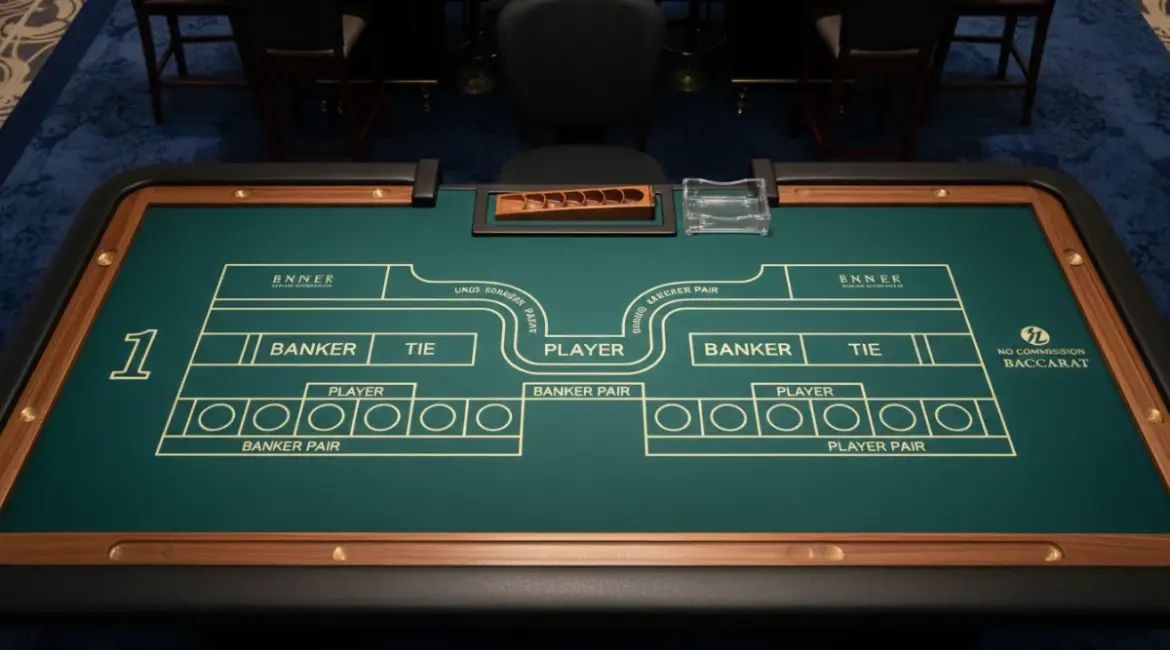
Baccarat captivates players with its allure of predictable sequences, yet the widespread practice of tracking patterns on scorecards and displays offers no edge over the house. Mathematical principles reveal that each hand stands alone, unaffected by prior results, debunking the notion that past outcomes dictate future ones.
This comprehensive examination explores the mechanics of baccarat tracking, the unyielding nature of independent events, cognitive reasons for the persistence of these beliefs, flawed strategies derived from them, and evidence-based approaches to playing smarter. By delving into probability theory and human psychology, players gain a clearer path to informed decisions.
Understanding Baccarat’s Elaborate Tracking Systems
In casinos across Canada and online platforms, baccarat tables feature an array of visual aids designed to record outcomes. These include the bead plate, which logs results in a grid format; the big road, displaying Banker and Player streaks as columns of red and blue circles; and derivative charts like the big eye boy, small road, and cockroach pig, which analyse patterns within the big road itself.
These tools transform simple win-loss sequences into intricate diagrams that suggest hidden rhythms. For instance:
- The bead plate mirrors the exact order of hands in rows and columns, providing a straightforward historical log.
- The big road groups consecutive Bankers or Players vertically, breaking to a new column on changes, making streaks visually prominent.
- Derived roads such as the big eye boy compare pairs of entries in the big road to detect repetition or choppiness, using different symbols for clarity.
- The small road and cockroach pig apply similar logic but start from different points, offering layered perspectives on supposed trends.
To newcomers, these displays resemble advanced analytics software. In reality, they merely chronicle what has occurred, repackaged to imply foresight. Casinos supply them gratis because they heighten engagement, encouraging prolonged play without altering the game’s fundamental odds.
The Independence Principle: Why History Doesn’t Predict
At baccarat’s heart lies a standard shoe of six to eight decks, shuffled thoroughly before play. Each hand draws from this finite deck, but the depletion effect remains negligible for prediction purposes. Probabilities stabilise at approximately 45.86% for Banker, 44.62% for Player, and 9.52% for Tie, consistent across every round regardless of preceding results.
Consider a streak of multiple Bankers: the remaining cards might tilt imperceptibly, but the variance swamps any exploitable shift. Key facts include:
- Shoe composition changes minimally per hand, with cut cards preventing end-game bias.
- No “memory” exists; a prior Tie does not influence the next draw’s likelihood.
- Long runs—five, ten, or more identical outcomes—are statistically routine in random sequences, not harbingers of reversal.
This independence underpins all casino games of chance. The gambler’s fallacy emerges when players anticipate correction after imbalance, mistaking randomness for equilibrium-seeking behaviour. Shoes exhibit no such tendency; outcomes follow binomial distribution, where clustering is the norm.
Psychology’s Role in Perpetuating Pattern Chasing
Human brains excel at pattern recognition, a trait honed by evolution for survival. Detecting animal tracks, weather cycles, or social cues conferred advantages, with false positives costing little compared to overlooked threats. Modern gambling triggers this hyperactive agency detection, transforming neutral data into illusory order.
Behavioural studies confirm people underestimate clustering in randomness. A coin flip sequence like HHTTTH appears non-random, yet perfectly aligns with expected probability. In baccarat, a column of unbroken Bankers on the big road feels portentous, prompting bets against continuation. Casinos exploit this by prominently displaying these records, fostering the illusion of control.
Engaged players wager more frequently and linger longer, boosting revenue. The displays’ accuracy as historians belies their zero predictive power, a deliberate design feature rooted in understanding cognitive vulnerabilities.
Dissecting Popular Systems Reliant on Patterns
Countless strategies hinge on tracking myths, each promising profits through trend interpretation. Martingale doubles bets post-loss, presuming eventual wins balance deficits. Paroli amplifies during streaks, riding perceived momentum. Others follow “dragon” runs (long streaks) or bet reversals on “choppy” roads.
These fail because they ignore fixed edges:
- Martingale succumbs to table limits and bankroll exhaustion before probability evens out.
- Paroli benefits from variance short-term but regresses to house advantage over volume.
- Trend systems chase illusions, as streak lengths follow geometric distribution without predictability.
Progressive wagering masks edges temporarily via variance, but negative expectation ensures house wins long-term. Finite funds versus infinite trials yield inevitable depletion.
Effective Strategies Grounded in Mathematics
Dismissing patterns liberates players to focus on verifiable edges. Bet Banker for its 1.06% house edge post-5% commission, versus Player’s 1.24% and Tie’s 14.36%. Avoid side bets, often exceeding 10% edges.
Bankroll discipline proves paramount:
- Allocating session limits prevents overextension.
- Implementing stop-loss and win goals curbs emotional escalation.
- Viewing play as priced entertainment, akin to theatre tickets, fosters sustainability.
These habits, paired with probability awareness, maximise enjoyment while minimising regret.
Embracing Baccarat’s Pure Appeal
Baccarat endures for its sophistication: swift resolutions, minimal decisions, and sophisticated ambiance. Relinquishing pattern pursuits enhances appreciation, replacing futile decoding with immersion in the moment. Cards fall indifferently to history; savvy players honour probabilities and boundaries, cultivating a balanced, pleasurable pursuit.