
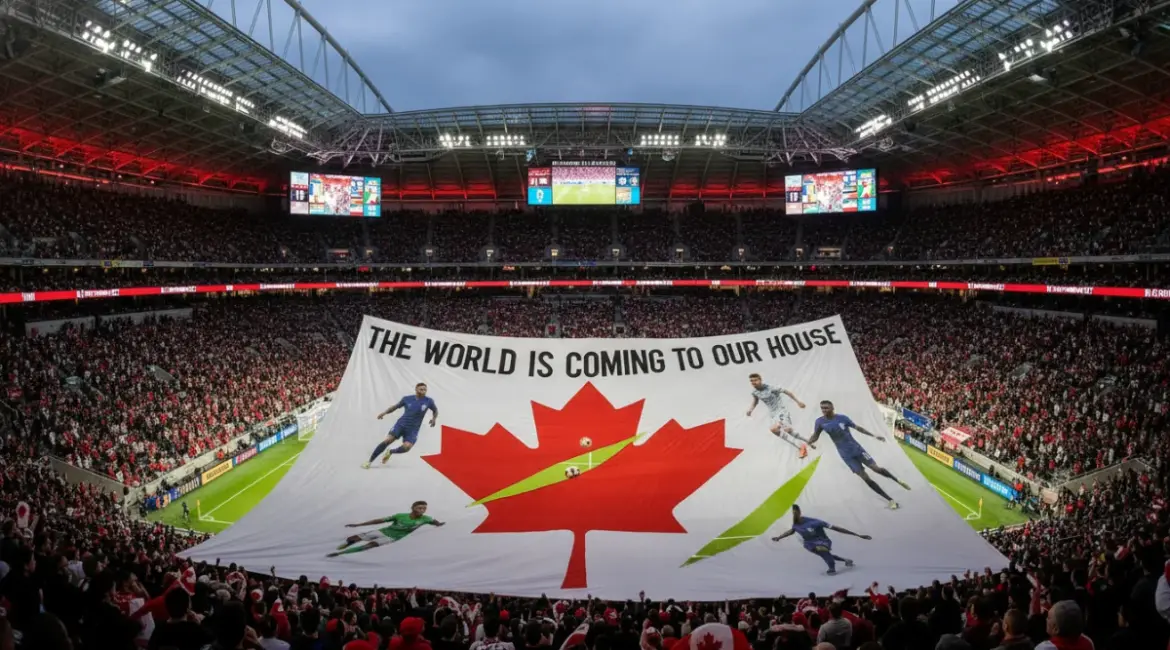
The 2026 World Cup will feel larger than any tournament before it, with a 48-team field, three host countries, and a schedule that stretches across Canada, Mexico, and the United States. That scale changes everything: depth matters more, travel matters more, and the teams with the best balance of talent and composure are the ones most likely to survive.
For Canadian supporters, the event carries an extra charge because matches will unfold in Vancouver and Toronto, with the national team hoping to make life difficult for the sport’s biggest powers. The reality, though, is that the trophy hunt will still run through the familiar giants, and the question is which of them can handle the demands of North American conditions.
Here is a fresh ranking of the ten teams that look best equipped to lift the cup.
How the Favorites Separate Themselves
International tournaments are rarely won by the most glamorous roster alone. They are usually decided by the squads that can stay healthy, adapt tactically, and keep their standards high from the first group match to the final knockout round. In a tournament this spread out, the teams with elite substitutes and flexible game plans gain a real edge.
The rankings below are based on four practical factors: overall squad quality, tournament experience, attacking firepower, and the ability to manage pressure when the bracket gets tight. That approach rewards teams that can win in different ways, not just teams that look impressive on paper.
The 10 Teams That Shape the Race
- France enters with a rare combination of star power and depth. Kylian Mbappé remains the headline attraction, but France’s real advantage is that the lineup stays dangerous even when the names change. The midfield is strong, the defense is athletic, and the team knows how to win in the biggest moments.
- Brazil still carries the aura that comes with five World Cup titles, and the current attack has the kind of creativity that can break matches open in seconds. Vinícius Júnior and Rodrygo give Brazil pace, invention, and the ability to punish defenders who lose concentration for even a moment.
- England continues to look like a team waiting for the final breakthrough. Jude Bellingham brings drive and control from midfield, while Harry Kane offers a reliable finishing presence. If England manages the pressure that always surrounds it, the roster is strong enough to go deep.
- Argentina remains dangerous even as the squad moves further into a post-Messi phase. Lionel Messi may no longer carry the entire burden, but his presence still matters, and the surrounding talent gives Argentina the kind of competitive edge that travels well in knockout football.
- Spain has blended its traditional technical control with more direct attacking movement. Lamine Yamal represents the new wave, and the broader squad has enough passing quality to control games while still attacking space aggressively when openings appear.
- Germany looks sharper again after recent tournament disappointments. The national side is built to control rhythm, win midfield battles, and impose structure on opponents who prefer chaos. That kind of discipline tends to age well in long tournaments.
- Portugal no longer depends on one central figure, which makes it more dangerous. With Bruno Fernandes, Bernardo Silva, and Rafael Leão, the team has multiple creators and finishers. That variety creates matchup problems for opponents that try to key on one player.
- Italy arrives with something to prove after missing consecutive World Cups. Even without the most dazzling front line, Italy still has a reputation for defensive organization, game management, and tactical discipline, all of which matter when the margins get thin.
- Netherlands has the kind of back-line stability and physical presence that can frustrate better-known opponents. Virgil van Dijk anchors a team that is hard to break down and comfortable turning matches into controlled, low-risk contests.
- Uruguay brings pressure, aggression, and constant movement. Marcelo Bielsa’s approach demands intensity from the first whistle, and Darwin Núñez gives the attack a sharp edge. Few teams will enjoy being drawn against a side that never stops running.
Comparing the Field at a Glance
| Team | Main Strength | Why It Matters |
|---|---|---|
| France | Depth and elite match winners | Can absorb injuries and still stay dangerous |
| Brazil | Creative attacking talent | Can turn tight games into open contests |
| England | Balanced roster | Has enough control to survive long runs |
| Argentina | Competitive chemistry | Wins difficult games even when style is not perfect |
| Spain | Technical command | Controls possession and creates steady pressure |
| Germany | Tactical structure | Can wear down opponents over 90 minutes |
| Portugal | Multiple creators | Makes defensive planning much harder |
| Italy | Defensive discipline | Useful in tense knockout matches |
| Netherlands | Defensive stability | Limits chances and keeps games close |
| Uruguay | High-intensity pressing | Disrupts opponents and forces mistakes |
Why North America Changes the Equation
The 2026 format rewards teams that can rotate without losing quality. Long travel, different climates, and a greater number of matches all increase the value of squad depth and recovery discipline. That is one reason France and Brazil sit near the top: both can change personnel without losing their identity.
It also helps the teams that stay compact and organized. Germany, Italy, and the Netherlands are especially attractive in that regard because they can reduce the chaos that sometimes defines World Cup knockout rounds. When matches tighten, structure often beats style.
Canada’s Outside Chance
Canada still enters as an underdog, but hosting on home soil gives the team a meaningful lift. Alphonso Davies offers pace, directness, and the kind of individual threat that can change a match in a single run. If the crowd gets behind the team in Vancouver and Toronto, Canada can make life uncomfortable for any opponent.
That does not mean a title run is likely. It does mean the hosts have enough energy and talent to force real conversations about the bracket, especially in the kind of environment where belief spreads quickly.
What a Title Run Will Require
- A healthy core of starters who can handle the tournament’s physical load.
- Reliable scoring from more than one attacking source.
- The ability to win ugly when possession and rhythm disappear.
- Calm decision-making in late knockout stages.
- Flexibility to adjust to travel, weather, and opponent style.
The Final Shape of the Race
France looks like the safest favorite, Brazil has the most explosive attack, and England probably has the most complete balance if everything clicks at the right moment. Argentina, Spain, and Germany are close behind, while Portugal, Italy, the Netherlands, and Uruguay all have the kind of profile that can wreck a bracket with one strong week.
However the draw unfolds, this tournament should produce the kind of drama that only the World Cup can deliver, and Canada will be right in the middle of it.