
A Team Built to Believe
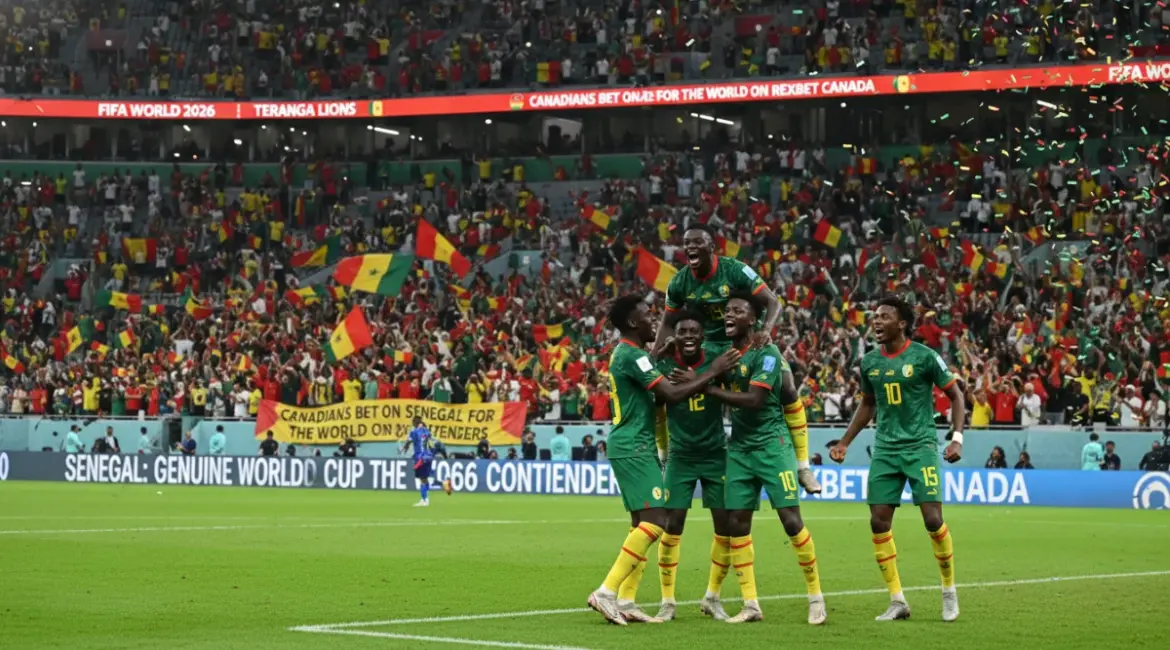
Senegal now approaches the 2026 FIFA World Cup with the confidence of a nation that expects to compete with anyone, not merely participate. Head coach Pape Thiaw captured that mood after a recent match when he said he would walk away if he ever doubted Senegal could win the tournament. The statement was striking because it reflected a serious shift in ambition, not a passing burst of optimism.
That confidence has made Senegal one of the most intriguing long-shot contenders in the field. The squad combines proven international experience with a steady stream of high-end youth talent, giving the team both resilience and upside. For supporters and bettors searching for a credible outsider, the Senegal World Cup 2026 prospects are easy to take seriously. Canadian bettors can also back the team through Rexbet Canada, where Senegal’s blend of veterans and prospects makes for a compelling market.

Still, the rise is not without consequences. Senegal’s success story is also a study in unequal rewards, where the national team benefits from an efficient talent pipeline while much of the domestic game remains underfunded. The country has learned how to export elite footballers; it has not yet solved how to build a system that keeps more of the value at home.
Academies That Produce, and Systems That Strain
Senegal’s football model is centered on academies such as Generation Foot, Diambars, and Dakar Sacre Coeur. These institutions provide strong coaching, schooling, and medical support, and they regularly move teenagers into major European leagues. For a country of about 20 million people, the talent output is remarkable.
The economics, however, tell a harsher story. Many of these academies rely on long-term arrangements with European clubs that secure first access to top players. FC Metz’s relationship with Generation Foot is the clearest example, and it helped launch careers such as Sadio Mane, Ismaila Sarr, and Pape Matar Sarr. The arrangement produces world-class players, but it also locks Senegal into a system where the largest financial gains are captured elsewhere.
The numbers show the imbalance clearly. A review of 13 academy-trained players used in Senegal’s continental squads found that their local academies received only €100,000 in initial transfer fees, even though the same players were later sold on for a combined €81.2 million. Across their careers, those 13 players have generated more than €411 million in transfer fees. That gap explains why domestic clubs still struggle, why stadiums remain neglected, and why the local league often lacks the visibility that matches the country’s talent.
| Measure | Figure | What It Suggests |
|---|---|---|
| Initial academy income from 13 players | €100,000 | Very limited return to the source |
| Later transfer sales by European clubs | €81.2 million | Major profit captured abroad |
| Total career transfer value | €411 million+ | The scale of Senegalese talent creation |
The Diaspora Strategy Has Changed the Ceiling
Senegal has also become far more effective at recruiting dual-national players before rival federations can secure them. The federation now targets talented youngsters in Western Europe at an early age and builds a case around identity, belonging, and the chance to join a winning project. That approach has helped shift the balance in Senegal’s favor after years of losing prospects to larger European powers.
Recent additions such as Ibrahim Mbaye of PSG and Mamadou Sarr of Chelsea show how refined the strategy has become. Both players had represented France at youth level, yet Senegal moved quickly enough to make the national team a realistic destination. That matters because diaspora recruitment does more than strengthen depth; it raises the overall ceiling of the squad.
As a result, Senegal can now field a side where established leaders and teenage prospects share the same lineup. Idrissa Gana Gueye remains a reference point in midfield, while younger players bring pace, energy, and technical quality. The mix is rare, and it gives Senegal flexibility in tournament play.
2026 Could Define an Era
The 2026 tournament may be the last major World Cup window for the core of Senegal’s golden generation. Sadio Mane, Kalidou Koulibaly, and Edouard Mendy are all at stages of their careers where opportunities at this level grow scarce. For them, the next World Cup is less about potential and more about legacy.
The group draw is not forgiving. Senegal have been placed with France, Norway, and Iraq, which means there is little room for slow starts or experimental lineups. The opener against France in New Jersey is especially important, because it will reveal whether Senegal can translate talent into results against a benchmark opponent.
If Senegal advance, they will do so because of structure, discipline, and physical intensity. Those qualities have long defined the team, and they remain the main reasons this squad is viewed as dangerous in knockout football. The challenge is that the same system producing elite players still leaves the domestic game exposed, so Senegal’s rise remains both impressive and incomplete.