
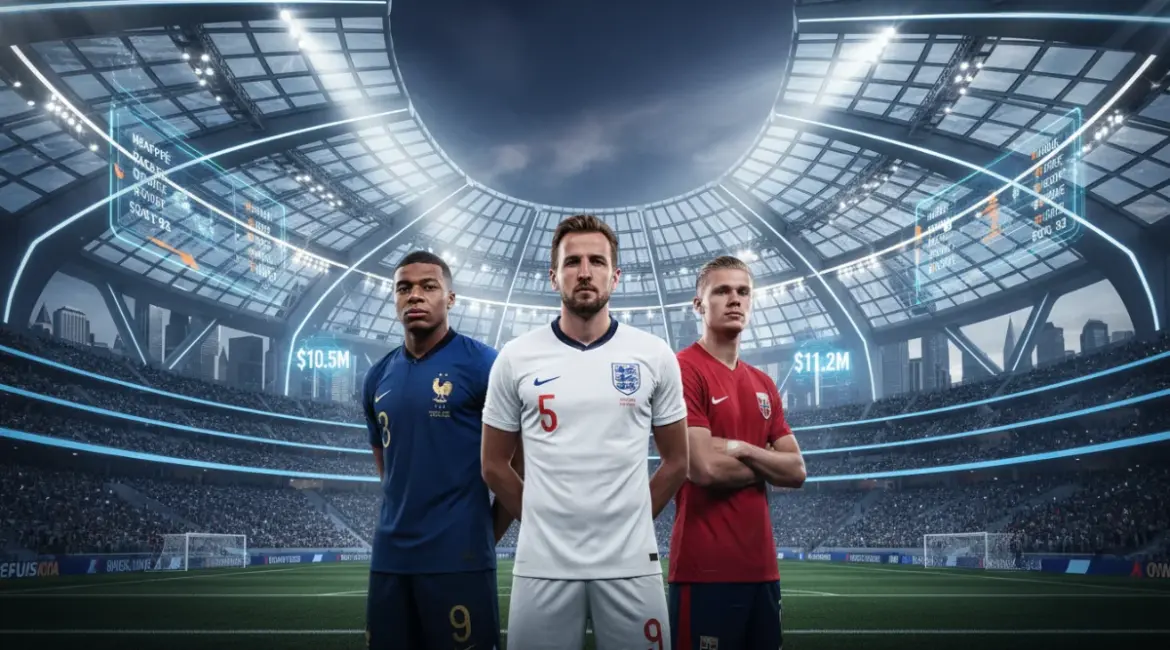
The official fantasy game for the FIFA World Cup 2026 has arrived, giving fans a new way to follow the tournament through a manager-style competition supported by Aramco. Players can assemble a 15-man roster, chase rankings at the global, confederation, and country levels, and target the sport’s biggest names from the opening whistle.
Among the early headline picks, Kylian Mbappe, Harry Kane, and Erling Haaland are expected to draw heavy attention because their attacking output could shape many lineups.

How the game is built
The format rewards careful planning rather than constant market movement, since player prices stay fixed throughout the tournament. That makes early decisions especially important, because managers must fit premium talent into a limited budget without expecting values to rise or fall later.
- Each squad contains 15 players: 2 goalkeepers, 5 defenders, 5 midfielders, and 3 forwards.
- The starting budget is $100 million, with an added $5 million once the knockout stage begins.
- No more than three players from one nation can be selected during the group stage.
- Unlimited transfers are allowed before the opening match on Thursday, 11 June, and again before the Round of 32.
- Managers may adjust captains and use bench substitutions during active matchdays to improve scoring output.
Scoring basics
Points come from real match events, so the game rewards both reliable starters and high-impact performers. Minutes on the field matter, but so do more specific actions such as scoring, assisting, defending well, and avoiding costly mistakes.
- Minutes played, goals, assists, and clean-sheet style contributions are all part of the scoring system.
- Players can lose points for cards, own goals, or conceding from their defensive positions.
- Additional points are available for penalties won or conceded, tackles, chances created, and shots on target.
- Free-kick goals earn a bonus, and a scouting bonus applies when a low-owned player delivers a standout match.
Premium names and price pressure
The toughest challenge for managers will be balancing superstar quality with the salary cap, especially in a 48-team World Cup spread across North America. The most expensive forwards sit at $10.5 million each, with Haaland, Kane, and Mbappe leading that tier.
Lionel Messi and Cristiano Ronaldo follow at $10 million apiece, showing how closely the game mirrors the sport’s most recognizable attacking talent.
Defensively, Portugal’s Nuno Mendes stands out as the highest-priced defender at $5.8 million, while Brazil’s Ederson and Alisson Becker, along with Spain’s David Raya and Unai Simon, headline the goalkeeper pool.
Why the pricing matters
The valuations reflect the FIFA/Coca-Cola Men’s World Ranking, and the top six countries dominate the premium bracket. Of the 25 most expensive players, 20 come from those six nations, while England and France each place five players among the costliest options.
Historical note: Mbappe won the adidas Golden Boot at the FIFA World Cup Qatar 2022. The award began as the Golden Shoe in 1982 and was renamed in 2010 to honor the tournament’s top scorer, with Silver and Bronze Boots awarded to the next two finishers.
Value beyond Europe
The Confederation Challenge Leaderboard adds another layer by comparing how well users do with players from different regions, which makes non-European bargains especially useful.
- Africa: Mohamed Salah is priced at $10 million, while Omar Marmoush comes in at $7.8 million.
- Asia: Son Heung-min is listed at $7.4 million, and Salem Al Dawsari is priced at $7.2 million.
- North America: Jonathan David, Raul Jimenez, and Christian Pulisic are all set at $7 million.
- Oceania: Chris Wood leads New Zealand’s options at $6.5 million.
For managers, the appeal is clear: the game combines national pride, tactical depth, and a price structure that forces hard choices from the very first lineup.